Why Mascara Smudges Under Your Eyes and Not on Your Lids
Quick Answer: Under-eye smudging is caused by contact, not by mascara quality - lashes touching the skin below during blinking, plus oil or emollient on that skin giving the pigment something to stick to. The four fixes in order of effect: powder the under-eye area before mascara, curl the lashes so they clear the skin, apply mascara only from the mid-lash outward on the lower half, and check whether your eye cream is the actual culprit. Waterproof formulas are the last resort, not the first.
Your lids are fine all day. But by two in the afternoon there is a faint grey line under your lower lashes, in exactly the same place every time.
That consistency is the clue. It is not the product failing randomly - it is the same contact happening thousands of times.

What is actually causing it?
Contact plus a receptive surface. Both have to be present, which is why the fixes work in combination.
The contact. You blink roughly fifteen to twenty times a minute. If your upper lashes are straight rather than curled, their tips sweep the skin under the eye on each blink. Over an eight-hour day that is thousands of small transfers of pigment onto the same patch of skin.
The receptive surface. Skin under the eye is thin and typically the most heavily moisturised area of the face. Eye cream, concealer with emollients, facial oil, and natural sebum all give transferred pigment something to sit in and spread through. Dry, powdered skin does not hold it nearly as well.
Two secondary contributors. Watery eyes, whether from allergies, wind, or screen use, carry pigment downward. And prominent or deep-set eye shapes create more contact - a deep-set eye means the brow bone pushes upper lashes closer to the lower lid.
So the reason the lid stays clean is straightforward: nothing is repeatedly touching it, and it is generally less heavily moisturised.
Fix the surface first
This is the highest-value change and the one people skip because it feels counterintuitive on delicate skin.
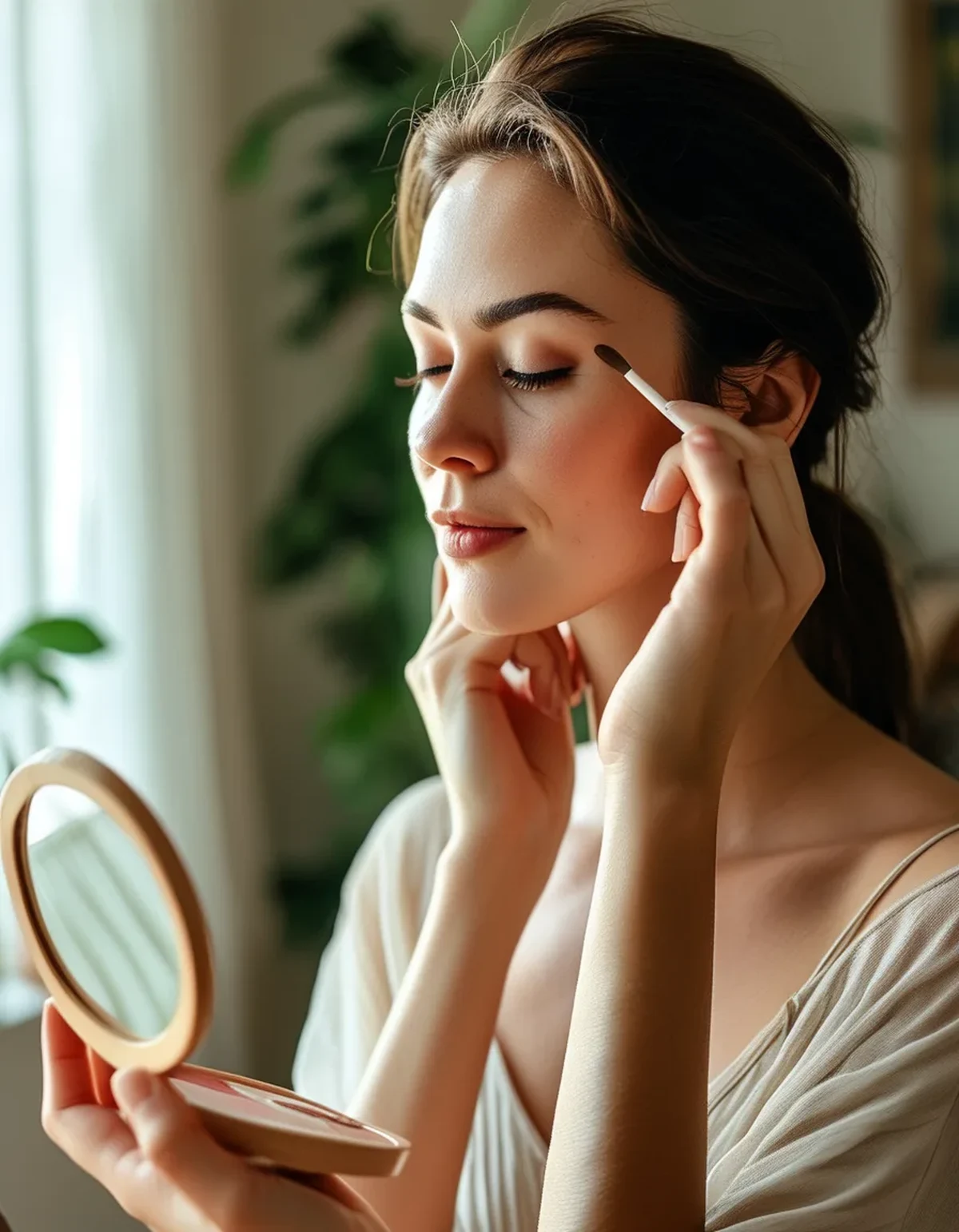
After concealer, set the under-eye area with a small amount of finely-milled translucent powder, applied with a small brush. Not a heavy layer - a light dusting is enough to change the surface from tacky to matte.
The timing matters. Powder goes on before mascara, not after. Powder over a smudge simply spreads it.
The eye cream question is worth taking seriously too. A rich eye cream applied right before makeup remains present under everything else all day. Two adjustments usually solve it: apply eye cream at night rather than in the morning, or apply it in the morning and give it a full ten minutes to absorb before anything else goes on.
Same logic for facial oils and heavy primers in that area. They are excellent for skin and they are actively working against you here.
For most people, powder plus a change in eye cream timing removes the majority of the smudging without touching the mascara at all.
Fix the contact
Three adjustments, in order of how much difference they make.
Curl the upper lashes. A curled lash points up and away from the skin instead of forward into it. This is the single biggest mechanical change available, and it matters more for straight lashes and for deep-set eyes. Curl before mascara, never after - curling coated lashes breaks them.
Change where you apply on the lower lashes. Most under-eye smudging on the lower lash line comes from mascara applied at the root, which is millimetres from skin that moves constantly. Apply from the mid-lash outward, or skip lower lashes entirely on long days. Almost nobody notices, and it removes an entire source.
Use less product on the upper lashes, and let it dry. Heavy application means more wet product available to transfer, and mascara continues setting for a minute or two after application. Blinking hard immediately afterwards is how the first deposit lands.
One more, for anyone whose eyes water: an under-eye area that is genuinely dry, plus a tissue blot rather than a rub when the eye waters, prevents most of the tracking. Rubbing is what turns a watery eye into a grey streak.
5 Mistakes That Make It Worse
1. Going straight to waterproof. Waterproof formulas resist water, not oil - and the under-eye smudge is usually oil-driven. Many people find waterproof mascara smudges just as much, while being far harder to remove and more damaging to lashes over time.
2. Applying eye cream immediately before makeup. The most common single cause, and the most fixable. Move it to the night routine or give it ten minutes.
3. Layering concealer heavily under the lower lash line. Concealer right up against the lash line gives transferred pigment a slightly tacky base to sit in. Keep it slightly below, and set it.
4. Rubbing the eye during the day. Contact lenses, allergies, and tiredness all produce eye rubbing, and that turns a faint deposit into a visible smear. A gentle blot with a tissue does the job without spreading anything.
5. Blaming the mascara and buying five more. If the smudge appears in the same place regardless of product, the product is not the variable. It is worth working through surface and contact before spending anything.

FAQ: Mascara Smudging Questions, Answered
Is waterproof mascara ever the right answer?
For swimming, crying, or a genuinely humid day, yes. As a daily solution to oil-driven smudging, it is a heavy-handed fix - the removal process involves rubbing a delicate area repeatedly, and daily waterproof wear is associated with more lash breakage.
Does tubing mascara help?
Often substantially. Tubing formulas form polymer tubes around each lash and release with warm water and gentle pressure rather than dissolving into oil. They tend to be the most smudge-resistant option that is still easy to remove.
Why did this start happening recently?
Common triggers are a new eye cream, a richer moisturiser, seasonal allergies making your eyes water, more screen time reducing blink quality, or simply drier air changing your skincare routine. Late summer allergy season is a very common cause of a sudden onset.
Should I see someone if my eyes water constantly?
Persistent watering, itching, redness, or crusting along the lash line is worth having looked at rather than working around with makeup - blepharitis and allergic conjunctivitis are both common and both treatable. This is general information, not medical advice.
TL;DR:
- Smudging needs contact plus a receptive surface - lashes sweeping skin, and oil for the pigment to sit in.
- Powder the under-eye area before mascara. Highest-value single change.
- Move eye cream to night, or give it ten minutes to absorb. Very common hidden cause.
- Curl the upper lashes so they clear the skin on every blink.
- Apply lower-lash mascara from mid-lash outward, or skip it entirely on long days.
- Waterproof resists water, not oil - tubing formulas usually work better and remove more gently.
If the smudge lands in the same spot every day, it is mechanics rather than the mascara - and mechanics are cheaper to fix.
Keep Reading
This article is for general informational and styling purposes only. Fit, sizing, and product availability may vary.