The Eyelash Curler Mistakes That Are Quietly Breaking Your Lashes
Quick Answer: Curl before mascara, never after. Use gentle pressure in three short pumps working outward from the base, replace the silicone pad every three months, and never pull the curler away while it is still closed. Curling over mascara is the single biggest cause of lash breakage, because dried mascara glues lashes to the pad.
It is a small, ordinary tool that most people were never actually taught to use, and the damage it causes is slow enough that nobody connects the two. Lashes get sparser at the outer corners, a few snap off at the base, and the conclusion is that lashes thin with age. Sometimes. Often it is the four seconds each morning.
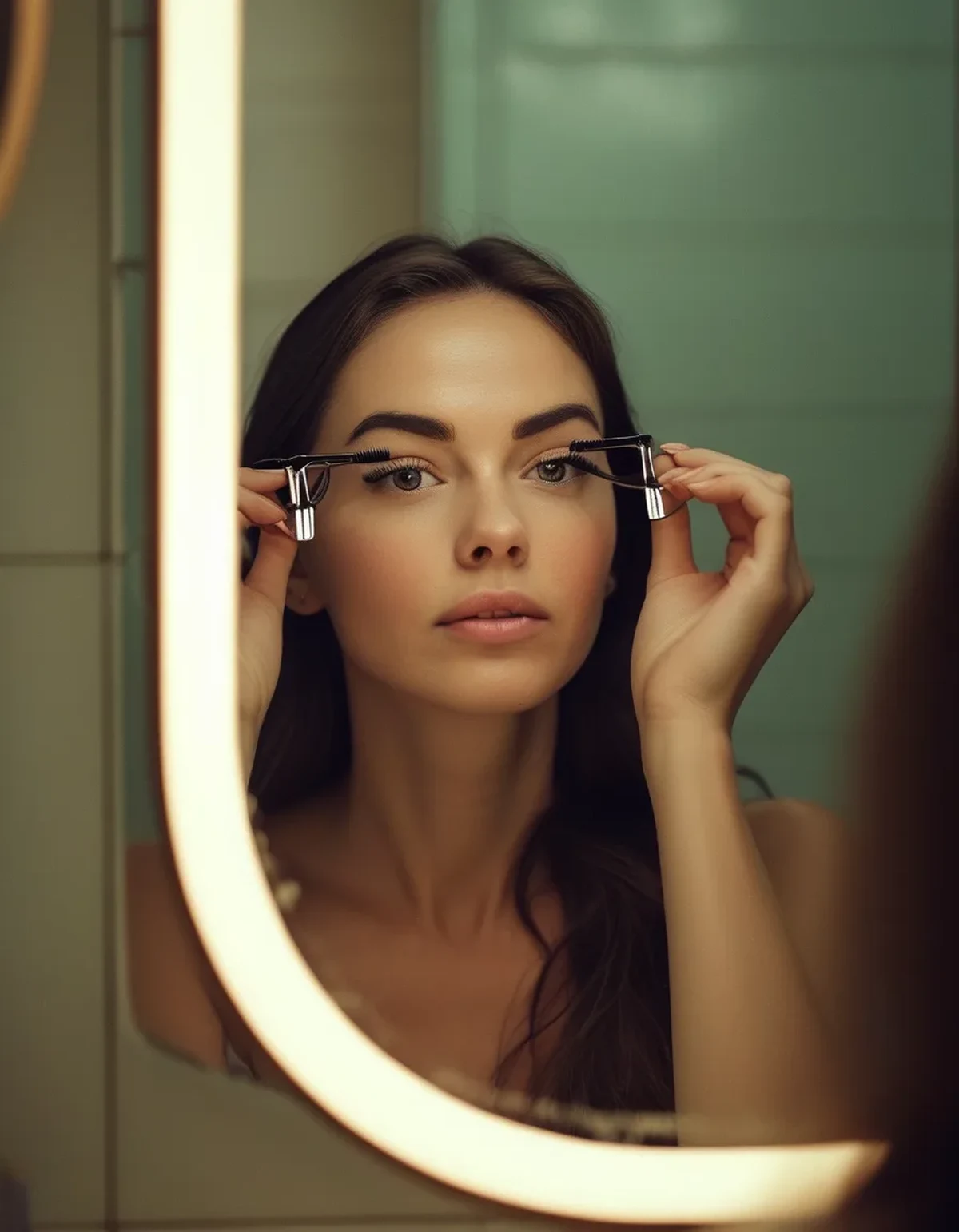
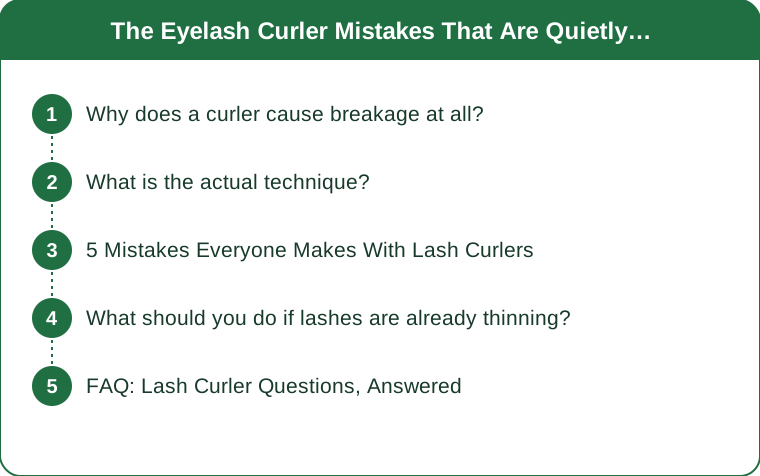
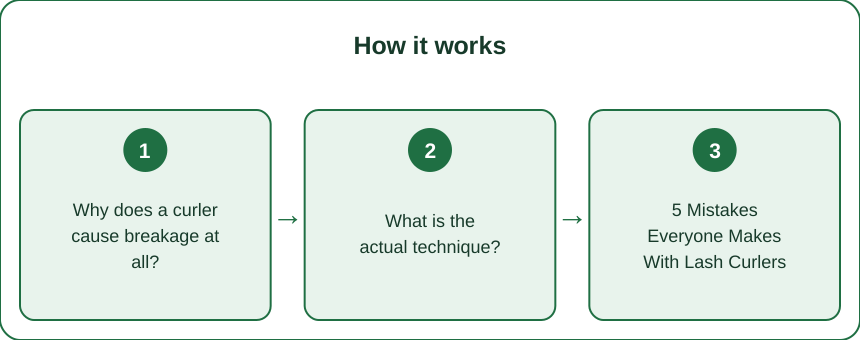
Why does a curler cause breakage at all?
Lashes are hair, and hair breaks when it is bent sharply under tension, particularly when it is dry or coated.
A curler works by clamping the lash between a metal bar and a silicone pad and applying a crimp. Done gently, the pad distributes pressure and the lash bends without damage. Done with force, or against a hardened pad, the pressure concentrates in a narrow line and produces a stress point - the same mechanism that puts a permanent kink in a lash and eventually snaps it there.
Three factors turn a safe crimp into a damaging one:
- Pressure. More force does not produce more curl beyond a point; it produces a crease.
- Pad condition. A worn, hardened, or split silicone pad has lost its cushioning, so all the load goes into a thin line.
- Coating. Anything on the lash - mascara, oil, primer - changes how it behaves under the clamp, and dried mascara actively adheres to the pad.
And unlike hair on your head, lashes have a short growth cycle and are individually visible. Losing five is noticeable in a way that losing five head hairs is not.
What is the actual technique?
Four steps, and the timing of the first one matters most.
1. Curl on clean, dry lashes, before mascara. Always. There is no version of curling after mascara that is safe.
2. Position at the base, not the middle. Open the curler, bring it toward your eye, and get as close to the lash line as you can without pinching skin. Look down slightly into the mirror rather than straight ahead - it gives you a clearer view and keeps the lid relaxed.
3. Three short pumps, moving outward. Squeeze gently for two seconds at the base, release, move a few millimetres along the lash, squeeze again, then once more near the tips. This creates a gradual curve rather than a single sharp bend at one point - and the sharp bend is what makes lashes look bent rather than curled.
4. Open the curler fully before pulling it away. This is where most accidental lash loss happens. Pulling while closed drags lashes out of the follicle.
One optional addition: warming the curler briefly with a hairdryer on low, then checking it against the back of your hand before it touches your eye. Warmth helps the curl hold, and it is also how people burn their eyelids, so test it every time.
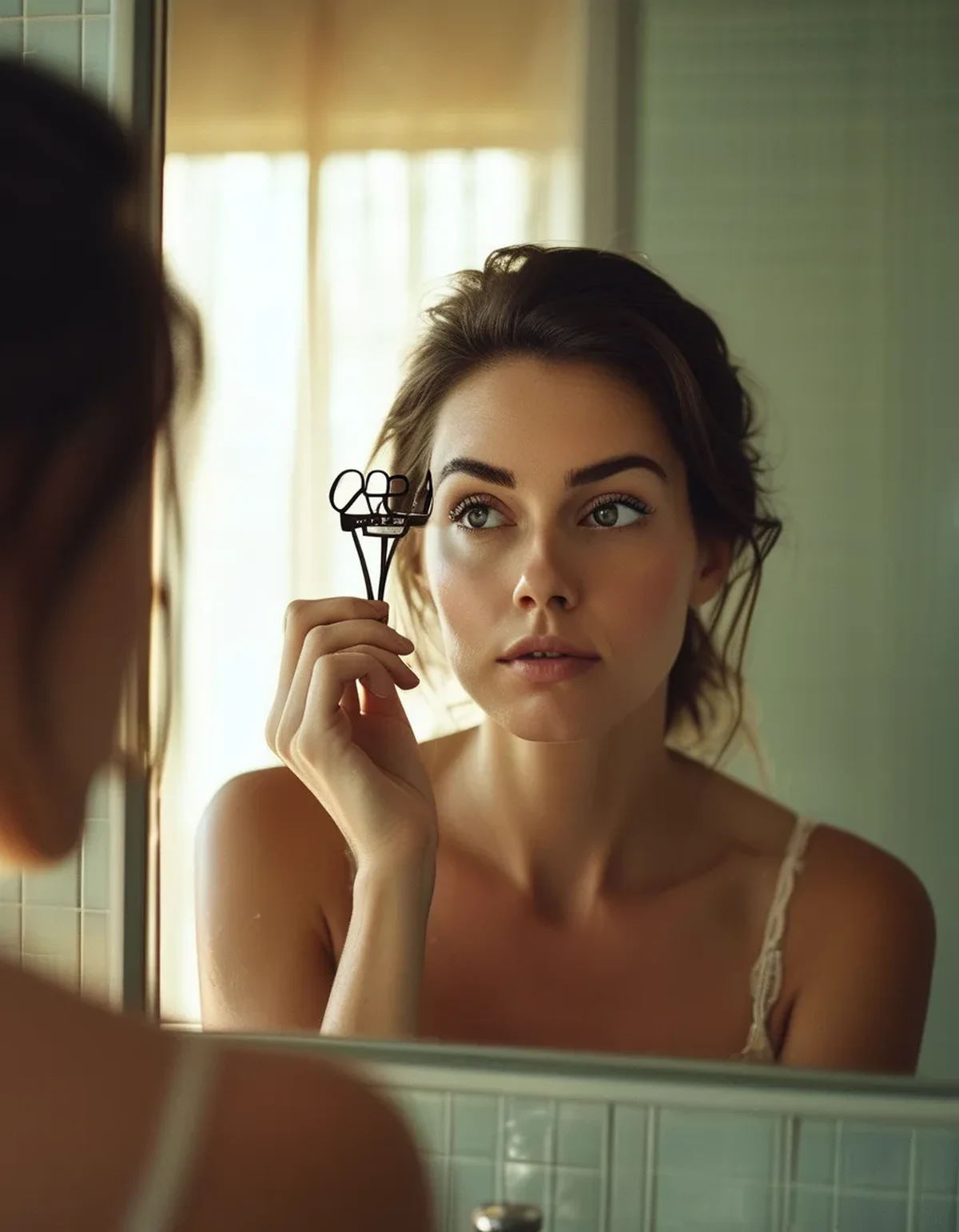
5 Mistakes Everyone Makes With Lash Curlers
1. Curling after mascara. Dried or drying mascara glues lashes to the silicone pad, and opening the curler pulls them out. If you have already applied mascara and want more curl, use a heated lash wand instead.
2. Never replacing the pad. Silicone pads compress and harden with use. Replace roughly every three months, more often with daily use. Most curlers ship with a spare that people never find.
3. Squeezing hard and holding. A ten-second clamp with force creates a crimp, not a curl. Short, gentle pumps produce a better shape and far less damage.
4. Using a curler that does not fit your eye shape. Curlers vary in the curvature of the frame. If yours pinches the outer corner or misses the inner lashes entirely, it is the wrong shape for your eye - and forcing it is how the outer corners get sparse. This is the mistake almost nobody suspects, because a curler feels like a generic tool.
5. Curling over lash extensions or a fresh lift. Both weaken the bond and can pull out your natural lashes along with the extension. If you have extensions, do not curl at all.
What should you do if lashes are already thinning?
Give them a break, then rebuild the routine around less mechanical stress.
Stop curling for four to six weeks. Lashes have a growth cycle of roughly one to three months, so this is enough time to see whether the density recovers. If it does, the curler was the problem.
Remove eye makeup properly and gently. Rubbing at waterproof mascara does at least as much damage as curling. Use an oil or micellar remover, hold a soaked pad against closed lashes for twenty seconds to dissolve the product, then wipe downward without scrubbing.
Reduce waterproof mascara to occasional use. It is designed not to come off, which means removal requires more friction.
Be patient with regrowth. A lash that has been shed takes weeks to reach full length, and there is no product that meaningfully accelerates the growth cycle. Conditioning serums may improve the appearance and condition of existing lashes; prescription treatments are a separate category and a conversation for a doctor.
And see a doctor if lash loss is sudden, patchy, affects one eye only, or comes with redness, itching, or crusting at the lash line. Those can indicate blepharitis, an allergy, or a thyroid issue rather than mechanical damage. This is general information, not medical advice.
FAQ: Lash Curler Questions, Answered
Should you curl lashes before or after mascara?
Before, always. Curling over mascara sticks lashes to the pad and is the most common cause of curler-related breakage.
How often should you replace an eyelash curler pad?
About every three months with regular use, or immediately if it is split, flattened, or has a groove worn into it. The pad, not the frame, is the part that wears out.
Does curling eyelashes damage them permanently?
Gentle, correct use does not cause lasting damage. Heavy pressure, worn pads, and curling over mascara do, and the effect accumulates slowly enough that it is usually blamed on something else.
TL;DR:
- Curl clean, dry lashes before mascara - never after.
- Three short gentle pumps from base outward beats one hard clamp.
- Replace the silicone pad every three months; a hardened pad is what creates the stress point.
- Open the curler fully before pulling it away, and stop entirely if you have extensions.
The tool is fine. The habits around it are what cost you lashes, and all six of them take about a week to change.
Keep Reading
This article is for general informational and styling purposes only. Fit, sizing, and product availability may vary.