What Indoor Heating Does to Your Brows and Lashes
Quick Answer: Central heating drops indoor humidity substantially, and hair - including brow and lash hair - loses moisture to dry air. The result is brittleness, more shedding, brow gel that flakes, and lash extensions or lifts that don’t last as long. The fixes are a bedroom humidifier, an oil-based conditioning step at night, and easing off heat styling and waterproof formulas for the season.
Nothing about your routine changed. The heating came on three weeks ago, and now everything is brittle.

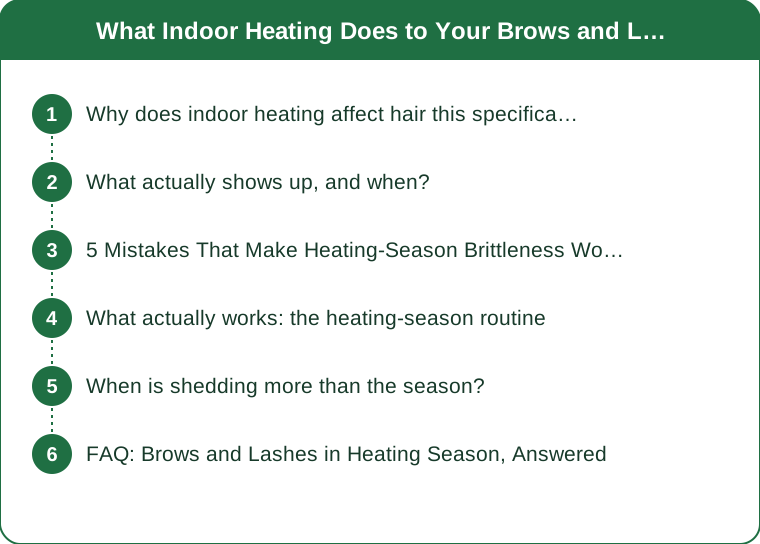
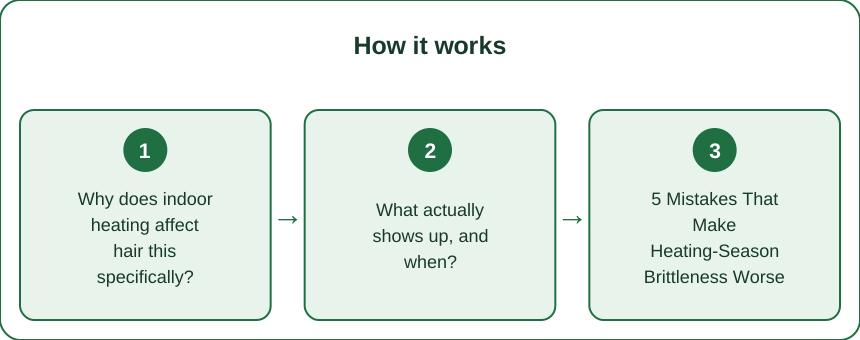
Why does indoor heating affect hair this specifically?
Because hair exchanges moisture with the air around it, continuously.
Hair is hygroscopic - it absorbs and releases water depending on the humidity of its environment. In humid air it takes on moisture; in dry air it gives it up. This is the same property behind frizz in summer and static in winter, and it applies to brow and lash hair exactly as it does to the hair on your head.
Central heating dries indoor air dramatically. Warming cold outside air without adding moisture drops its relative humidity substantially - heated indoor air in winter frequently sits well below the 40-60% range generally considered comfortable, and can fall much lower in a well-heated room.
Brows and lashes are unusually exposed. Unlike scalp hair, they get no protection from surrounding hair, they’re on the part of you closest to the air, and they receive nothing from the conditioning routine you apply to your head. They are, effectively, unconditioned hair sitting in dry air all day.
And they’re short, which matters more than it sounds. A lash is a fraction of the length of a scalp hair, so proportionally more of it is exposed tip - the driest, most damaged part of any hair. Damage that would be trimmed away on your head is a large fraction of the whole lash.
What actually shows up, and when?
A fairly predictable sequence over the first weeks of heating season.
Weeks 1-2: texture change. Brows feel coarser and more wiry. Lashes feel stiffer. Nothing looks obviously different yet.
Weeks 2-4: styling stops working. Brow gel goes flaky or patchy, brow hairs won’t stay where you put them, and mascara looks clumpier for no apparent reason. This is usually the first thing people actually notice, and it gets blamed on the product.
Weeks 3-6: more shedding. More lashes on your cheek and on the towel. Some of this is genuinely seasonal - hair shedding varies across the year - and some is breakage from brittleness. The two look identical and are treated differently, which is worth knowing.
Weeks 4-8: treatments underperform. Lash lifts fall flat sooner, extensions shed faster, tints fade quicker, and lamination looks rough at the ends. Dry, porous hair holds chemical treatments less well and releases them faster.
And a separate contributor arriving at the same time: more hot showers, more heated styling nearby, more face washing with hot water, and more time in rooms with air blowing. Every one of these adds to the same drying effect, which is why the change can feel abrupt even though the mechanism is gradual.
5 Mistakes That Make Heating-Season Brittleness Worse
Mistake 1: Reaching for more product. Brittle brows that won’t hold don’t need stronger gel - more product on a dry hair shaft flakes more, not less. Condition first, style second, and the same gel starts working again.
Mistake 2: Staying on waterproof formulas. Waterproof mascara requires oil or a dedicated remover and more mechanical rubbing to take off. More rubbing on brittle lashes means more breakage, and heating season is exactly when to switch to a regular formula and only use waterproof when you actually need it.
Mistake 3: Hot water on the face. The same principle that applies to body skin applies here - hot water strips lipids from skin and the hairs sitting in it. Lukewarm, and shorter.
Mistake 4: Over-brushing dry brows. Brushing is good for distribution and stimulation and bad when done aggressively on brittle hair. A soft spoolie, gentle strokes, and preferably after an oil rather than on bare dry hair.
Mistake 5: Blaming the serum. Lash serums that were working in September frequently look ineffective in December. The serum is usually fine - the growth it’s producing is being offset by increased breakage. Adding a conditioning step alongside the serum tends to resolve this, and it’s a better first move than switching products.
What actually works: the heating-season routine
Four additions, none of which take more than a minute.
1. A humidifier in the bedroom. The highest-impact item on this list by a considerable margin, because it addresses the cause rather than the symptom. Aim for around 40-50% relative humidity. You’re in that room for a third of the day with your face directly in the air, and it helps your skin, sinuses, and sleep at the same time.
2. An oil or conditioning step at night. A small amount of castor oil, squalane, or a dedicated lash conditioner applied with a clean spoolie to brows and along the lash line. Once a night is enough, and a little goes a long way - too much migrates into the eyes and is irritating.
A caution worth stating: the evidence that castor oil grows lashes is largely anecdotal. What it does reliably is condition and reduce breakage, which frequently produces the appearance of fuller lashes because fewer are snapping. That’s a real benefit described accurately.
3. Lukewarm water and gentler removal. Soak makeup off rather than rubbing it off - a cotton pad held in place for ten seconds does what thirty seconds of rubbing does, without the mechanical damage.
4. Ease off treatments for the season, or space them out. If lifts and laminations are looking rough by week three, extending the interval between them and conditioning throughout usually produces a better result than repeating the treatment sooner. Chemically processed hair in dry air is the combination that produces the worst outcomes.
A realistic timeline: texture improves within about two weeks of adding conditioning and humidity. Reduced shedding takes longer to be noticeable - four to six weeks - because you’re waiting to stop losing hairs rather than to gain them.
When is shedding more than the season?
Some brow and lash loss is normal and seasonal. Some warrants attention.
Generally normal:
- A few lashes lost daily - lashes have their own growth cycle and turn over continuously
- Mildly increased shedding in autumn and winter
- Brows feeling coarser or more unruly in dry months
- Slower regrowth after over-plucking in winter than in summer
Worth getting looked at:
- Noticeable thinning or bald patches in the brow, particularly the outer third
- Sudden or rapid loss of lashes or brow hair
- Loss accompanied by redness, scaling, itching, or crusting at the lash line
- Hair loss elsewhere at the same time
- Loss alongside fatigue, weight change, or temperature intolerance
Two specific things worth naming. Thinning of the outer third of the eyebrow is a recognised sign associated with thyroid dysfunction, and it’s a common enough presentation that it’s worth mentioning to a doctor rather than treating cosmetically. And blepharitis - inflammation of the lash line - causes lash loss along with redness, crusting, and irritation, and it’s common, treatable, and frequently mistaken for dryness.
Also worth knowing: several medications, significant stress, iron deficiency, and rapid weight change can all affect hair including brows and lashes, usually with a delay of a few months. The seasonal explanation is the most likely one and it’s not the only one. This is general information, not medical advice - persistent or patchy loss deserves an actual assessment.
FAQ: Brows and Lashes in Heating Season, Answered
Does castor oil really grow lashes?
The growth claims are largely anecdotal. What it does reliably is condition the hair and reduce breakage, which often looks like growth because fewer lashes are snapping off.
How long until a humidifier makes a difference?
Texture and comfort improve within a couple of weeks. Reduced shedding takes four to six weeks to become noticeable.
Should I stop lash lifts or extensions in winter?
Not necessarily - space them out and condition in between. Chemically processed hair in very dry air is the combination that produces the worst results.
Is more shedding in autumn normal?
Some seasonal variation in hair shedding is well documented and normal. Patchy loss, rapid loss, or loss with redness and irritation is a different situation and worth getting checked.
TL;DR:
- Hair exchanges moisture with the air, and heated indoor air is very dry
- Brows and lashes are short, exposed, and get none of your hair conditioning routine
- The first sign is styling failing - flaky gel, clumpy mascara - not visible thinning
- A bedroom humidifier is the highest-impact fix; a nightly oil is the second
- Outer-third brow thinning or lash-line redness is a doctor conversation, not a product one
The serum didn’t stop working. The radiator started.
Keep Reading
This article is for general informational and styling purposes only. Fit, sizing, and product availability may vary.