Does Chlorine Actually Fade Your Brow and Lash Tint Faster?
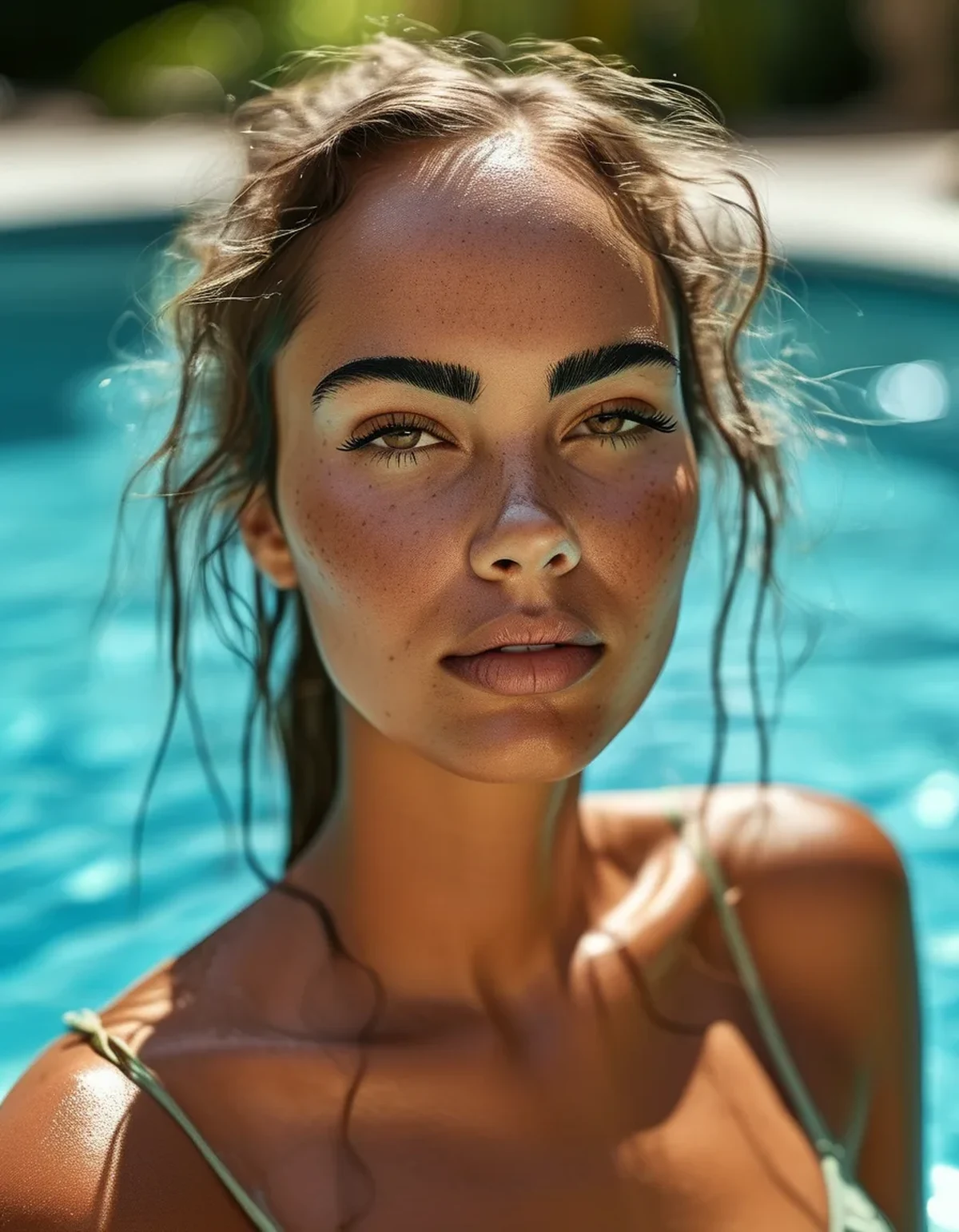
Quick Answer: Yes — chlorine is genuinely more oxidizing and drying than regular water, which accelerates the fading of brow and lash tint noticeably faster than normal daily washing alone, often cutting tint longevity by roughly a third to half during regular pool exposure compared to non-swimming periods.
If tint that normally lasts 4-6 weeks seems to fade within 2-3 during a summer of regular pool use, that’s a real, explainable pattern, not inconsistent salon work.
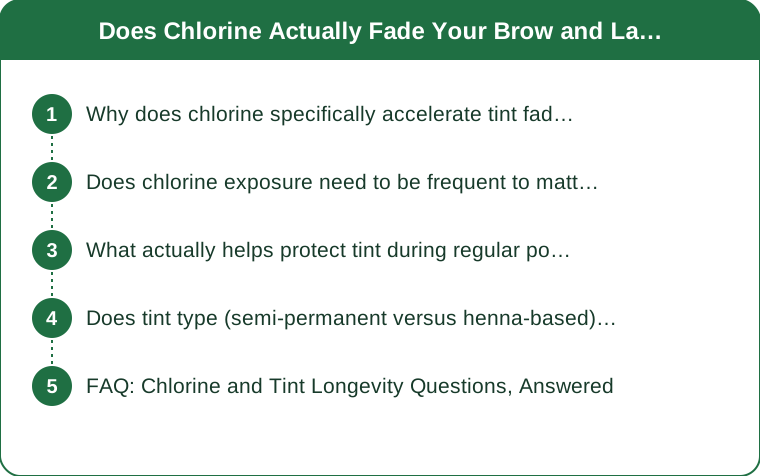
Why does chlorine specifically accelerate tint fading?
Chlorine is a strong oxidizing agent, meaning it chemically breaks down pigment molecules more aggressively than plain water does during normal washing — this is the same mechanism by which chlorine fades hair color and swimwear fabric color over repeated exposure, and brow and lash tint pigment isn’t exempt from this same chemical process.
Does chlorine exposure need to be frequent to matter, or does even occasional exposure add up?
Frequency matters significantly — a single pool visit has a much smaller cumulative effect than regular, multiple-times-weekly swimming, which is why people who swim occasionally in summer notice less dramatic fading than regular lap swimmers or those with daily pool access during warmer months.

What actually helps protect tint during regular pool use?
Applying a thin layer of a protective, water-resistant balm or petroleum jelly over brows and lash line before swimming creates a barrier that reduces direct chlorine contact with the pigmented hairs, which is the same principle used to protect hair color during swimming. Rinsing brows and lashes with fresh water immediately after leaving the pool, rather than letting chlorinated water dry on them, also reduces prolonged chemical contact.
Does tint type (semi-permanent versus henna-based) affect how much chlorine impacts it?
Henna-based tints, which stain the skin and hair rather than just coating the surface, tend to be somewhat more chlorine-resistant than standard semi-permanent tints, though neither is fully immune to accelerated fading with regular chlorine exposure — expect some acceleration either way during a heavy pool season.
FAQ: Chlorine and Tint Longevity Questions, Answered
Should I get tint done differently if I know I’ll be swimming regularly?
It’s worth mentioning your swimming frequency to your technician — they may recommend henna-based tint or a slightly deeper initial tint to account for the faster expected fading.
Does saltwater have a similar fading effect to chlorine?
Saltwater is generally less chemically aggressive toward tint pigment than chlorine specifically, though sun exposure (common in outdoor saltwater settings) independently accelerates fading through UV exposure, so the net effect can still be noticeably faster fading either way.
Is there a way to fully prevent chlorine-related fading?
Not fully, short of avoiding pool exposure entirely, but a protective balm barrier and prompt fresh-water rinsing meaningfully slow the fading rate even with regular swimming.
TL;DR:
- Chlorine is a strong oxidizer that breaks down tint pigment faster than regular water
- Frequency of exposure matters — occasional swimming fades tint far less than regular laps
- A protective balm barrier before swimming meaningfully slows the fading process
- Henna-based tints tend to be somewhat more chlorine-resistant than standard semi-permanent tint
Faster fading during pool season is a real chemical effect, not inconsistent salon technique.
Keep Reading
This article is for general informational and styling purposes only. Fit, sizing, and product availability may vary.