The Brow and Lash Product Expiration Dates Nobody Checks (Until There's a Problem)
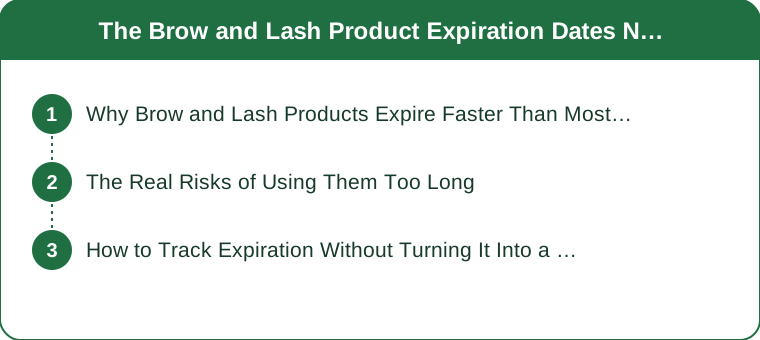
Brow and lash products sit closer to the eye than almost anything else in a makeup bag, and they also happen to be some of the fastest-expiring products people own — a combination that makes expiration tracking more important here than almost anywhere else in a beauty routine, and yet it’s rarely checked. Here is why these products expire so fast, the real risks of using them too long, and how to track it without turning it into a chore.
Why Brow and Lash Products Expire Faster Than Most Makeup
The specific reasons: the the-wand-introduces-bacteria-with-every-use (the repeated in-and-out wand motion on mascara and lash serums introducing air and bacteria into the tube every single use, accelerating degradation far faster than a pressed powder or a product applied with a clean brush — the applicator-design-itself-speeds-up-expiration), the the-liquid-and-cream-formulas-degrade-faster-than-powder (the liquid-based brow and lash formulas generally having a shorter viable lifespan than powder-based products, a general cosmetic chemistry pattern relevant to the brow-lamination-honest-guide and mascara-mistakes-fixes categories — the formula-type-predicts-shelf-life), the the-active-ingredients-in-growth-serums-break-down-over-time (the peptide and conditioning actives in lash serums specifically losing potency well before the product looks or smells noticeably different — the actives-degrade-silently-with-no-visible-warning), the the-eye-area-products-carry-tighter-safety-margins (the proximity to the eye meaning even a mild bacterial contamination poses meaningfully higher risk than the same contamination on a product used elsewhere on the face — the eye-proximity-raises-the-real-stakes), the the-frequent-daily-use-shortens-real-world-lifespan-further (the daily use, common for both mascara and brow products, meaning the tube’s contents cycle through far more open-air exposure over its life than an occasional-use product — the usage-frequency-compounds-the-expiration-timeline), and the reframe (the fast expiration as a real, mechanism-based property of these specific products, not an arbitrary or overly cautious guideline).
The Real Risks of Using Them Too Long
What’s actually at stake: the bacterial-eye-infections (the expired or contaminated mascara and lash products being a documented, fairly common cause of eye irritation and infection — the this-is-a-well-established-real-risk-not-a-theoretical-one), the the-reduced-or-reversed-serum-effectiveness (the lash growth serum actives degrading enough over time to become essentially ineffective, meaning continued use past expiration may just be an expensive habit with no benefit — the youre-not-getting-what-you-think-youre-paying-for), the the-texture-changes-affect-application-quality (the mascara specifically clumping, flaking or drying out in ways that affect both look and how easily it comes off, beyond just an infection risk — the practical-application-problems-not-just-safety-ones), the the-allergic-reaction-risk-increases-with-degraded-formulas (the breakdown products of an aging formula sometimes triggering irritation even in people without a reaction to the fresh product — the degraded-formula-can-cause-new-sensitivities), the the-symptoms-can-be-subtle-at-first (the early signs of an eye-area product problem — mild dryness, slight redness — often being easy to dismiss rather than immediately connected to an old product — the subtle-early-signs-get-missed), and the frame (the real risks as infection, reduced or reversed serum benefit, degraded application quality, and new sensitivity — genuine reasons to track this specific product category more carefully than most).
How to Track Expiration Without Turning It Into a Chore
The practical system: the write-the-open-date-on-the-product-itself (the a small label or marker note with the date first opened being far more reliable than trying to remember or calculate from a purchase date — the write-it-down-once-trust-it-later), the the-know-the-general-lifespan-by-product-type (the mascara generally needing replacement around three months, cream or gel brow products somewhat longer, and lash serums per their specific label — a rough mental reference removes the need to research each time — the a-rough-rule-of-thumb-per-category-is-enough), the the-set-a-recurring-low-effort-reminder (the a simple recurring phone reminder tied to the shortest-lifespan product in the routine — mascara — prompting a quick check of everything else at the same time — the batch-the-check-around-the-fastest-expiring-item), the the-trust-sensory-changes-as-a-backup-signal (the a noticeable change in smell, texture or how a product performs being a valid signal to replace it even before a calculated date, per the lash-serum-honest-guide logic — the senses-are-a-legitimate-secondary-check), the the-buy-smaller-sizes-if-replacement-lags-behind-usage (the choosing smaller product sizes specifically for items that tend to expire before they’re used up, avoiding the temptation to keep using something past its window just because product remains — the right-sized-purchase-prevents-the-temptation-to-overuse), and the frame (the tracking system as writing the open date once, knowing rough lifespans by category, batching the check around the fastest-expiring item, trusting sensory changes as a backup signal, and buying appropriately sized products — a five-minute habit that closes a real, eye-adjacent safety gap).
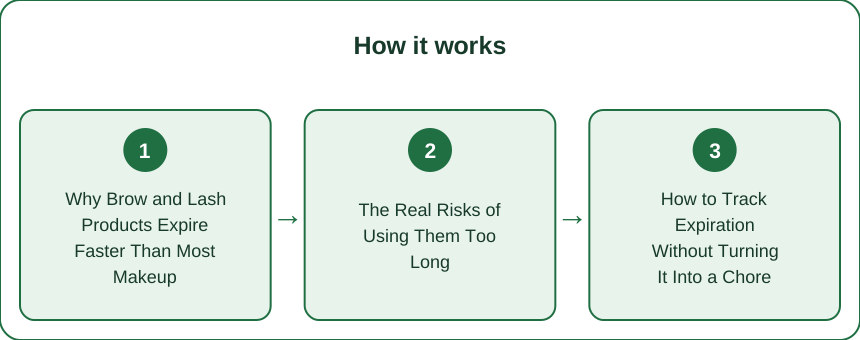
Brow and lash products expire faster than most makeup because their wand applicators introduce air and bacteria with every single use, their liquid and cream formulas are inherently less stable than powders, and the active ingredients in growth serums specifically lose potency well before any visible sign of aging appears — all compounded by daily use and unusually close proximity to the eye. The real risks of ignoring this aren’t hypothetical: expired mascara is a documented, fairly common cause of eye irritation and infection, degraded serum actives mean continued use may deliver no benefit at all, and an aging formula can trigger new sensitivities even in people who tolerated the fresh product fine. Tracking it doesn’t need to be a chore — writing the open date directly on the product once, knowing rough replacement windows by product type, setting one recurring reminder tied to the fastest-expiring item to prompt a check of everything else, trusting noticeable texture or smell changes as a valid backup signal, and buying smaller sizes for products that tend to expire before they’re used up all close this real safety gap in a few minutes.
Keep Reading
This article is for general informational and styling purposes only. Fit, sizing, and product availability may vary.