Brows and Lashes Behind Glasses: What Changes and What Nobody Adjusts
Quick Answer: Glasses change how brows and lashes read - lenses magnify or minimise your eyes depending on your prescription, frames cast a shadow that flattens brow definition, and long or curled lashes brush the lens. The main adjustments are stronger brow definition to compete with the frame, a curl that lifts up rather than out, and choosing formulas that resist transfer onto the lens.
Eye makeup and brow advice almost universally assumes nothing is sitting on your face. For anyone in glasses all day, several of the standard rules produce the opposite of the intended effect.
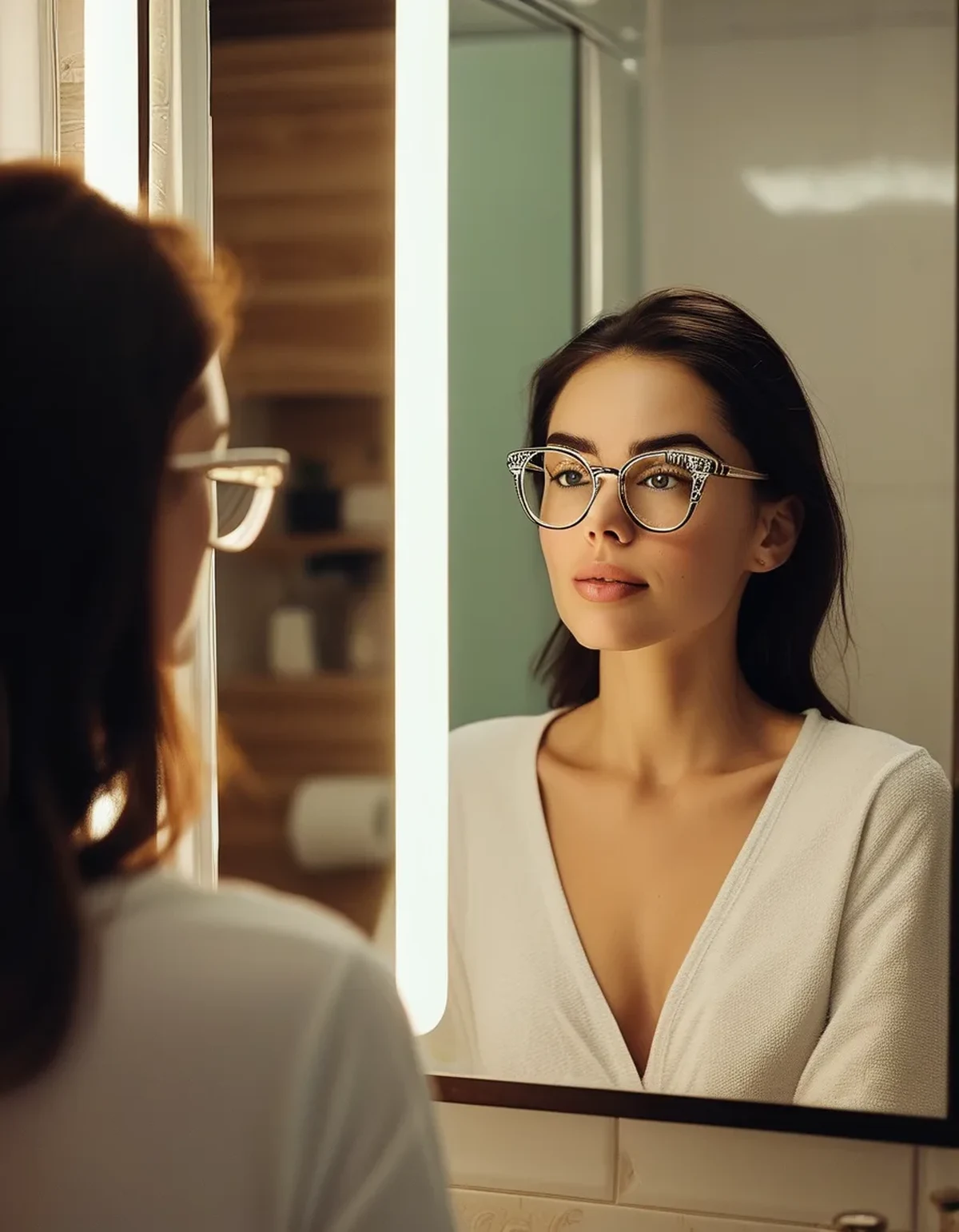
What do lenses actually do to how your eyes look?
It depends entirely on your prescription, and it is worth knowing which direction yours goes.
Minus lenses, for short-sightedness (myopia): these are concave and make your eyes appear smaller from the outside, with a stronger effect at higher prescriptions. They can also create a visible ring at the lens edge.
Plus lenses, for long-sightedness (hyperopia) and most reading glasses: these are convex and magnify your eyes, sometimes considerably.
Why this matters practically:
- If your eyes look smaller through your lenses, you need more definition than you would otherwise - fuller lashes, a defined brow, and stronger liner - because everything is being visually reduced
- If your eyes look larger, you need less. Heavy liner and very full lashes become overwhelming through a magnifying lens, and imperfections in application are magnified too. A smudged line that would be unnoticeable is clearly visible.
Frames add their own effects, independent of prescription:
- The frame casts a shadow across the brow, particularly with thicker frames and overhead lighting, which flattens definition
- A dark frame competes with the brow for attention. A soft brow behind a heavy frame effectively disappears.
- The frame line and the brow line interact. When they run roughly parallel, the effect is harmonious; when they conflict, it reads as unbalanced.
A quick self-test: take a photo of yourself with and without glasses, in the same light. The difference is usually larger than you expect, and it tells you which of the adjustments below you actually need.
Adjustment 1 and 2: Brow shape and brow strength
Adjustment 1: Match the brow to the frame line.
- The brow should ideally sit above the top of the frame, or be fully visible through it. A brow half-hidden behind the top rim reads as absent.
- If your frames sit high and cut across the brow, consider either a lower-sitting frame or a slightly higher-arched brow shape
- Frame shape and brow shape should not fight. A very angular frame with a very rounded brow, or vice versa, creates visual noise. Roughly echoing the frame’s line is the safe approach.
- Round frames soften an angular brow; angular frames suit a defined arch
Adjustment 2: Increase brow definition to compete with the frame.
This is the single change most glasses wearers need and most have not made.
- Go one shade deeper than you would without glasses, particularly with dark frames
- Define the tail - it is the part most often lost behind or below a frame edge
- Use a product with staying power. Frames touch the brow area repeatedly through the day, and pencil transfers onto the frame.
Product choices that work behind glasses:
- Tinted brow gel - the most reliable. Coats the hair rather than sitting on skin, so far less transfer.
- Brow pomade - strong definition, waterproof formulas resist frame contact
- Brow pencil - fine for filling gaps, prone to transfer where the frame rests
- Brow lamination or tinting - genuinely well suited to glasses wearers, because there is nothing to transfer at all. Lamination also brushes hairs upward, which lifts the brow above the frame line.
Where people go wrong: softening the brow because the frame already feels like a lot. The result is a face where the glasses are the only feature, which is the opposite of the intention.
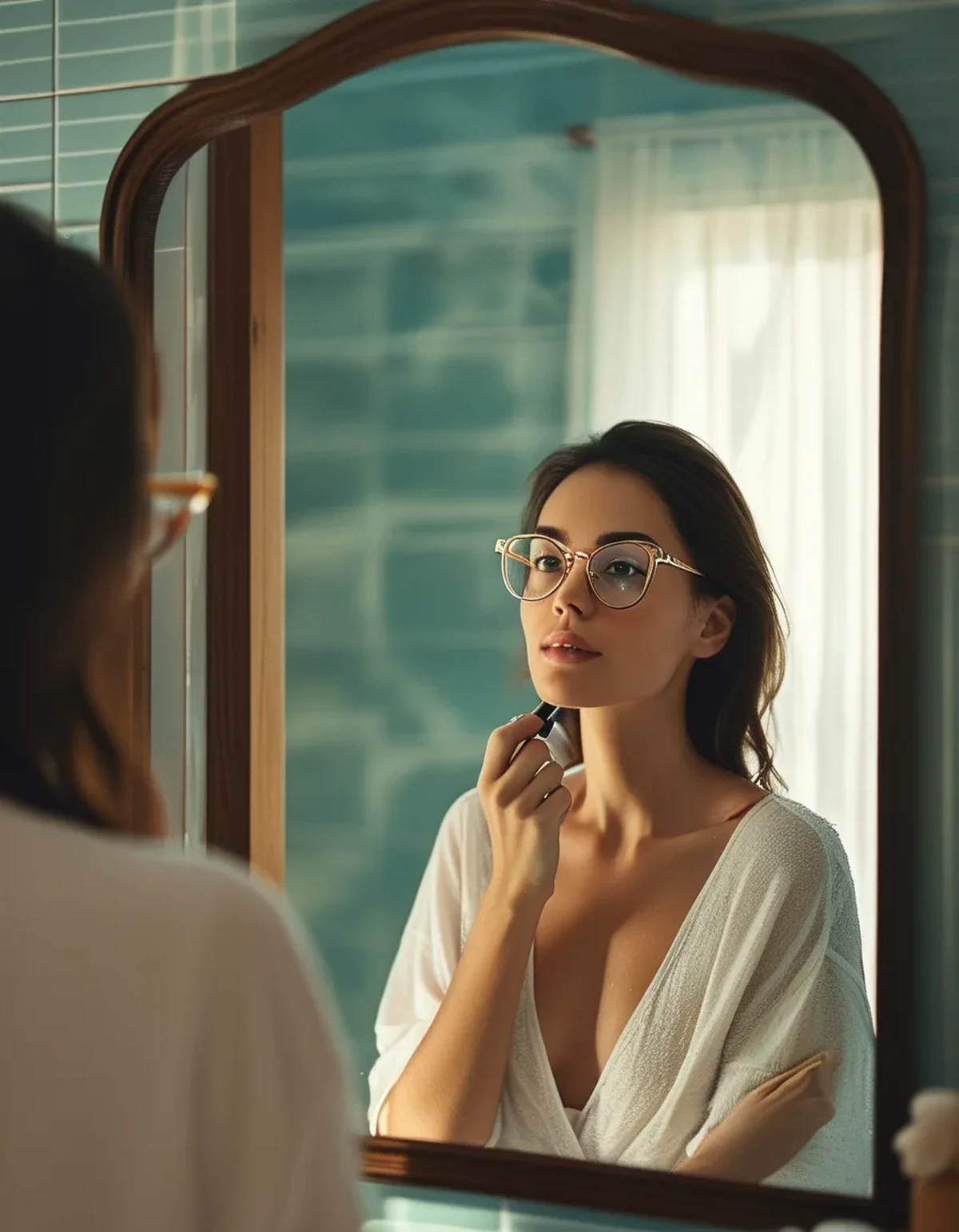
Adjustment 3, 4 and 5: Lashes, transfer, and the shadow problem
Adjustment 3: Fix lashes brushing the lens.
A common and genuinely irritating problem - smudged lenses, flattened lashes, and mascara marks on the inside of the glass.
- Curl upward, not outward. A curler used at the very base with a firm hold lifts lashes up toward the brow rather than pushing them forward into the lens.
- Choose a lengthening mascara over a volumising one if lashes already touch - volume adds thickness in every direction
- Frames with more vertex distance - sitting further from the eye - solve it mechanically. Adjusting the nose pads outward gains a couple of millimetres.
- Lash lifts suit glasses wearers well because they lift from the root, whereas extensions add length that goes straight into the lens
- If you wear extensions, ask for a shorter length in the centre where lashes are longest and most likely to make contact
Adjustment 4: Prevent transfer onto lenses and frames.
- Waterproof or tubing mascara transfers dramatically less
- Set the under-eye area with a light powder, where nose pads and lower rims sit
- Skip heavy creams and oils around the eye before wearing glasses - they migrate onto lenses through the day
- Clean lenses properly. Makeup residue diffuses light and makes your eyes look hazier through the lens, which quietly undermines everything else.
Adjustment 5: Counter the frame shadow.
- A light concealer or a touch of highlight under the brow bone lifts the shadowed area
- Avoid dark shadow in the crease with heavy frames - the frame shadow plus a dark crease reads as tired
- Lighter, brighter shades on the lid counteract the darkening effect of the frame
- Overhead lighting is the worst case. If you check your makeup in a bathroom with downlights, you are seeing maximum frame shadow - check in daylight near a window for a realistic view.
What Nobody Tells You About Brows, Lashes and Glasses
You probably cannot see well enough to do your own eye makeup. This is the most practical problem and the least discussed. Short-sighted people take their glasses off to apply makeup and then cannot see what they are doing. A magnifying mirror is the standard fix, or single-lens flip-up makeup glasses, which let you work on one eye at a time with the other lens flipped up.
Your glasses collect brow product and it builds up. The top rim and the area where the frame contacts the brow accumulate pomade and pencil. Clean the frames themselves, not just the lenses, weekly.
Anti-reflective coating changes how visible your eyes are to others. Lenses without it produce reflections that obscure your eyes in most lighting and in every photograph. AR coating is the highest-value optical upgrade for anyone who cares how their eyes read, and it costs relatively little.
Progressive and varifocal lenses change your head position, often tilting the chin up to use the reading portion. This alters how your brows sit relative to the frame through the day, and it is why some people find their brow makeup looks fine in the mirror and odd in photos.
Brow lamination is disproportionately useful for glasses wearers. Brushing hairs up and setting them there lifts the brow above the frame line and eliminates transfer entirely. Aftercare matters - keep them dry for the first 24 to 48 hours, and be aware that lamination is a chemical process that can irritate sensitive skin. Patch testing is standard practice with a reputable technician.
Lash serums and glasses have a specific interaction. Longer lashes are the goal, and past a certain length they hit the lens constantly. If you are using a serum and wear glasses daily, plan for a curl routine or expect to be cleaning lenses several times a day. Serums containing prostaglandin analogues can also cause irritation and, in some cases, changes to the skin or iris around the eye - worth reading the ingredients and speaking to a professional.
Contact lens days need a different routine entirely. Without the frame, the same brow that looked correctly defined now looks heavy. Many people keep a lighter hand for contact days rather than one routine for both.
FAQ: Glasses, Brows and Lashes, Answered
Should my brows be above or below my frames?
Above, or fully visible through the lens. A brow cut in half by the top rim reads as missing, which is the most common frame-fit issue.
How do I stop my lashes hitting my lenses?
Curl at the root for an upward lift rather than a forward one, choose lengthening over volumising mascara, and adjust the nose pads outward for a few extra millimetres. Lash lifts suit glasses better than extensions.
Should I wear less eye makeup with glasses?
Depends on your prescription. Minus lenses shrink your eyes, so more definition helps; plus lenses magnify, so a lighter hand is better and any imperfection is magnified too.
Is brow lamination a good idea for glasses wearers?
Often yes - it lifts hairs above the frame line and eliminates transfer. It is a chemical process, so patch testing matters, and results typically last four to eight weeks.
How do I apply eye makeup if I cannot see without my glasses?
A magnifying mirror, or flip-up makeup glasses that let you work on one eye with the other lens down. Good lighting matters more than either. This is general information, not medical advice - see a professional for any eye irritation or reaction.
TL;DR:
- Minus lenses shrink your eyes and need more definition; plus lenses magnify and need less
- The brow should sit above the frame or be fully visible - and go a shade deeper with dark frames
- Curl lashes upward from the root rather than outward to stop them brushing the lens
- Tinted gel, pomade, and lamination resist frame transfer; pencil does not
- Anti-reflective coating is the cheapest way to make your eyes actually visible to other people
Most brow and lash advice quietly assumes bare skin. Two adjustments cover most of the gap: define the brow enough to hold its own against the frame, and curl up rather than out. Everything else is refinement.
Keep Reading
This article is for general informational and styling purposes only. Fit, sizing, and product availability may vary.